Pre-Shipment Inspection for Bagasse Tableware: AQL Levels, Defects and Checks
Key points
- An AQL inspection checks a random sample of cartons against a written specification, with separate limits for critical, major and minor defects.
- Molded fiber defects to look for include cracks, thin spots, burrs, uneven color, moisture and contamination, plus weight, size and carton packing.
- The inspection brief matters as much as the inspector: write the specification, defect list and sampling plan before production ends.
A container of bagasse tableware leaves the factory with one set of paperwork and arrives with another reality. Between them sits one cheap, powerful step: an independent check of finished goods against your written specification, done before you pay the balance.
This guide explains how an AQL inspection works for molded fiber tableware, which defects matter, what an inspector measures on site and what to put in the brief. It builds on the first-order timeline in our guide to MOQ and lead time for bagasse tableware.
What AQL means
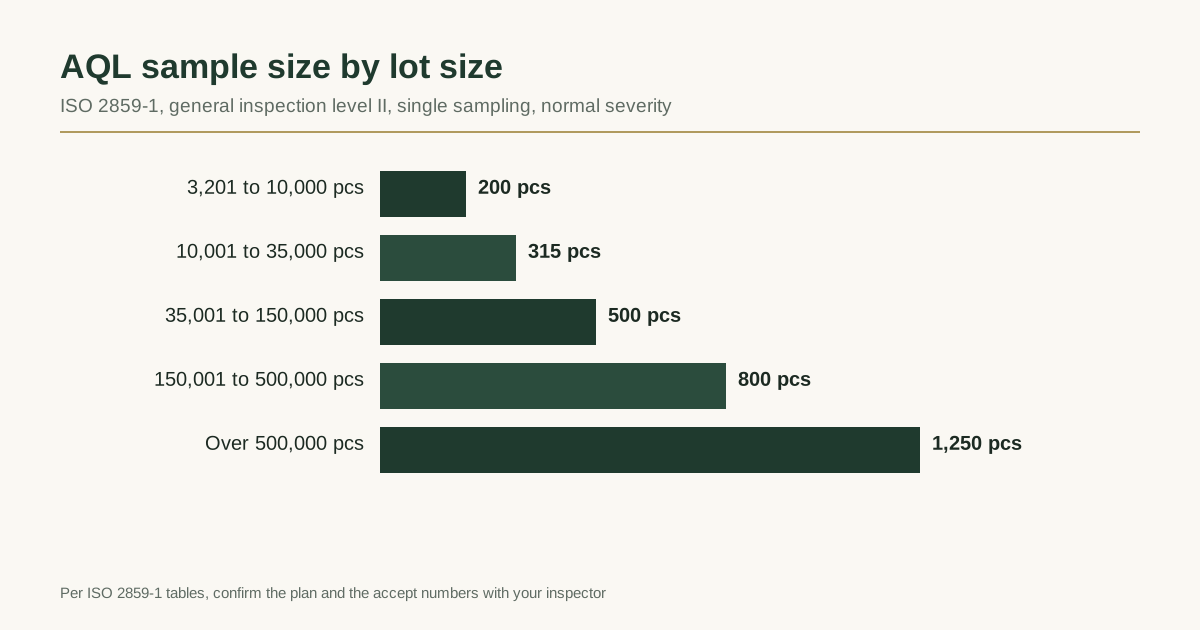
AQL stands for acceptable quality limit. It is a sampling method, not a promise that every piece is perfect. The inspector draws a random sample from the finished lot, counts defects and compares the count with an accept or reject number from a published table. The table most inspection companies use is ISO 2859-1, which links lot size, inspection level and AQL to a sample size and an accept number.
The method has three decisions to make:
- Inspection level. General level II is the usual default. Tighter levels need larger samples.
- AQL by defect class. Critical, major and minor defects each get their own limit.
- Lot definition. The lot is normally one item, one production batch, one shipment. Mixed items need separate samples.
The numbers below are standard single-sampling, normal-inspection values. Confirm them with your inspector, because plans can be adjusted by agreement.
| Lot size | Sample size | Accept or reject at AQL 2.5 |
|---|---|---|
| 3,201 to 10,000 pieces | 200 | Accept 10, reject 11 |
| 10,001 to 35,000 pieces | 315 | Accept 14, reject 15 |
| 35,001 to 150,000 pieces | 500 | Accept 21, reject 22 |
| 150,001 to 500,000 pieces | 800 | Read from the ISO 2859-1 table |
| Over 500,000 pieces | 1,250 | Read from the ISO 2859-1 table |
For critical defects the accept number is usually zero: one critical defect in the sample fails the lot.
Defect classes for molded fiber
Agree the definitions before production, ideally with photos of each defect and a reference sample.
| Class | Examples | Typical treatment |
|---|---|---|
| Critical | Mold, foreign matter or contamination, visible insects, strong chemical smell, wrong material | Zero accepted |
| Major | Holes, cracks, thin spots, deformation, dimension outside tolerance, weight outside tolerance, lid does not fit, heavy stains | AQL 2.5 is common |
| Minor | Small burrs, slight color variation, small specks, minor rim roughness, light carton scuffs | AQL 4.0 is common |
The most common molded fiber problems trace back to the process. Thin spots come from uneven forming, burrs from worn trimming dies, soft or damp pieces from a short or cold press, and dark specks from pith or contaminated fiber. Our guide to how bagasse tableware is made explains where each is created.
What an inspector measures on site
A good brief lists the checks and the tolerances. Typical items for tableware:
- Piece weight. Weigh a set of pieces on a scale. Compare each with the target and tolerance in the specification.
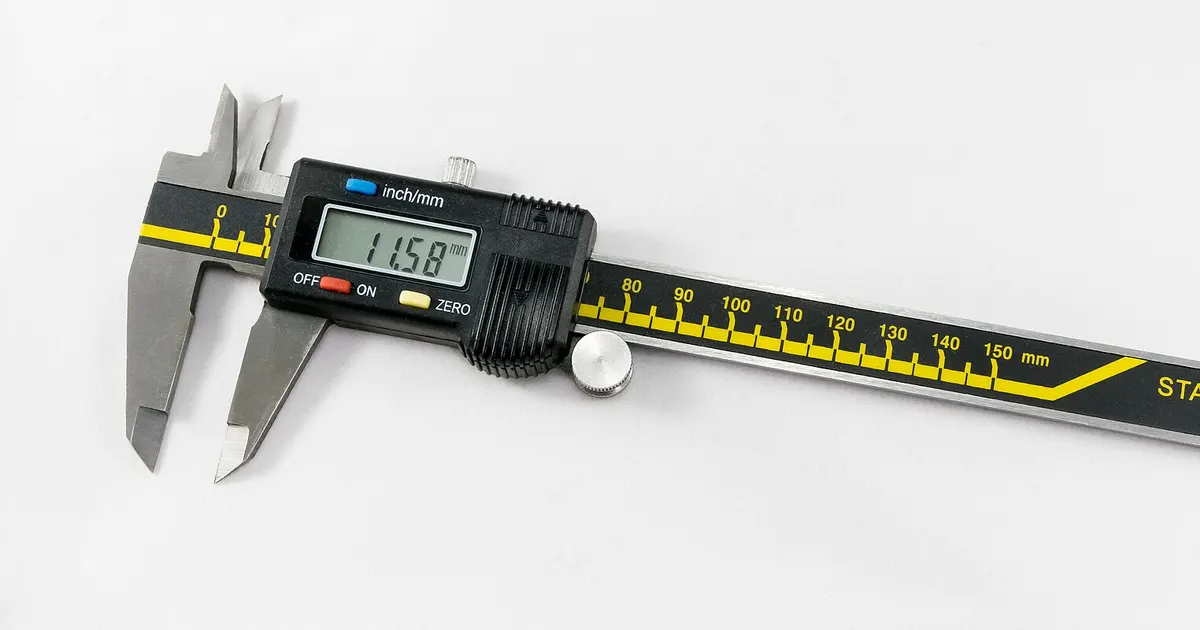
- Dimensions. Measure diameter, height and rim width with a caliper. For lidded items, measure base and lid together.
- Wall thickness at the base and the rim.
- Color against the approved reference sample, under daylight or a standard light.
- Surface and rim. Look for cracks, burrs, thin spots, holes and loose fiber.
- Odor. A damp, musty or chemical smell is a warning sign.
- Moisture. Pieces should feel dry, and a moisture meter reading helps when the factory has specified a limit.
- Function. A water-fill leak test, a stack test and a lid closure test on a small number of pieces.
- Packing. Pieces per sleeve, sleeves per carton, carton dimensions and weights, carton marks and shipping mark text.
- Documents on file. Test reports and certificates for the exact item, checked for name and date, not verified by us.
Tolerances come from you. Many buyers set weight tolerance within a band such as plus or minus 5 to 10 percent and dimension tolerance within a millimeter or two, but the right numbers depend on your item and your use. Write them in the specification and have the supplier sign it.
Timing and cost
Book the inspection when production is complete and typically at least 80 percent of the goods are packed in final cartons. Do it before the balance payment and before the container booking is final, so that a failure leaves time to rework.
Fees are commonly quoted per inspector per day, with prices that differ by region and company, and often run a few hundred USD per day. A single inspector can usually cover one item and one lot per day. A large order, several items or a distant factory can mean more days. Ask for a quote with the number of days stated.
The inspection brief
The brief should include:
- Item names, sizes and weights, with the signed specification and reference sample photos.
- Defect classes, with definitions and photos.
- Sampling plan: level, AQL values, lot definition.
- Checklist of measurements and tests, with tolerances.
- Packing and marking requirements, with a carton marks drawing.
- Documents to be sighted.
- Report format, language and delivery time.
Ask the inspector to take photos of every defect found, of the carton marks and of the loaded container.
What to do with the result
- Pass. Release the balance payment according to your terms and book the vessel.
- Pass with notes. Record the minor defects and agree whether they are acceptable.
- Fail. Ask the factory for a corrective plan: re-sort, rework or remake, then reinspect. Agree in advance who pays for reinspection and for the delay.
- Disputed. Keep the samples and the report. Take photos with a scale in them, so that the defect is clear.
Do not release the full payment on the basis of a factory’s own report alone. A written, independent record makes any later claim much easier.
Loading supervision
Many problems appear at loading, not in production: wet cartons, crushed bottom layers, wrong carton counts or a container that was not dry. Ask the inspector or a separate person to check the container before loading and photograph the loading. Our guide to first-order timelines lists the surrounding steps.
How biopackvn.com fits in
We are a matching service, not a factory and not an agent that manages orders. We do not run, manage or certify inspections. You send an RFQ, we reply within 24 business hours and we introduce up to 3 Vietnamese manufacturers that suit your item and volume. You then deal with them directly, including your own inspection, and you keep the report on file. It is free for buyers, we take no commission and we sign an NDA on request.
We do not verify or confirm any manufacturer’s compostability certificate (BPI, TUV Austria OK compost, ASTM D6400 or EN 13432). Request the original and check it with the issuer. See our guide to compostability certificates and food contact tests.
Next step
When you request quotes, ask each supplier to confirm in writing:
- Specification: weight, dimensions and tolerance for your item
- Inspection access: that your inspector may enter the plant and draw a random sample
- Defect rules: the defect classes and AQL levels you plan to use
- Rework terms: what happens if the lot fails
- Documents: test reports and certificates for the exact item
For a first order, see our bagasse tableware sourcing page and then send your RFQ.
Frequently asked questions
What AQL should I use for bagasse tableware?
Many buyers use general inspection level II with an AQL of 2.5 for major defects and 4.0 for minor defects, and zero tolerance for critical defects such as contamination. Food contact items often warrant a tighter limit than non-food goods. Set the levels in writing with your inspector, and agree them with the supplier before production.
When should the inspection take place?
Usually when production is complete and most of the order, commonly 80 percent or more, is packed in final cartons. That lets the inspector pull a random sample from the finished goods. Book the inspection before the balance payment and before the container is booked for loading.
Who pays for the inspection and who does it?
The buyer usually arranges and pays for it, using a third-party inspection company or its own staff. Fees are commonly quoted per inspector per day. We do not manage orders or inspections, so you contract the inspector and keep the report on file.
BioPack VN is a matching service, not a manufacturer. Figures above are typical market ranges for planning, not quotes, and we do not confirm any manufacturer's certificates. Send an RFQ to be introduced to up to 3 Vietnamese manufacturers within 24 business hours.