Cassava Starch Bags vs PBAT Compostable Bags: What the Film Is Made Of and How It Behaves
Key points
- Most bags sold as cassava starch bags are blends of thermoplastic starch and PBAT, a fossil-based biodegradable polyester, sometimes with PLA or mineral filler.
- A higher starch share lowers resin cost but reduces tear strength, moisture resistance and shelf life, so the ratio is the real specification.
- Compostability certificates cover the exact film, thickness, color and ink, and a bag that contains starch is not automatically compostable or plastic-free.
The label says cassava, the film feels like plastic, and the supplier says it is biodegradable. All three can be true at once, because most compostable bags are not single-material films. They are blends, and what a bag can and cannot do is decided by the ratio of the ingredients.
This guide explains what cassava starch bags and PBAT bags are, how the blend changes performance, which certificates and claims apply and what to test before ordering. It is a material guide, so figures are typical ranges to confirm with each manufacturer. For the wider range of plant-based items, see our overview of eco packaging from Vietnam.
What the film is made of
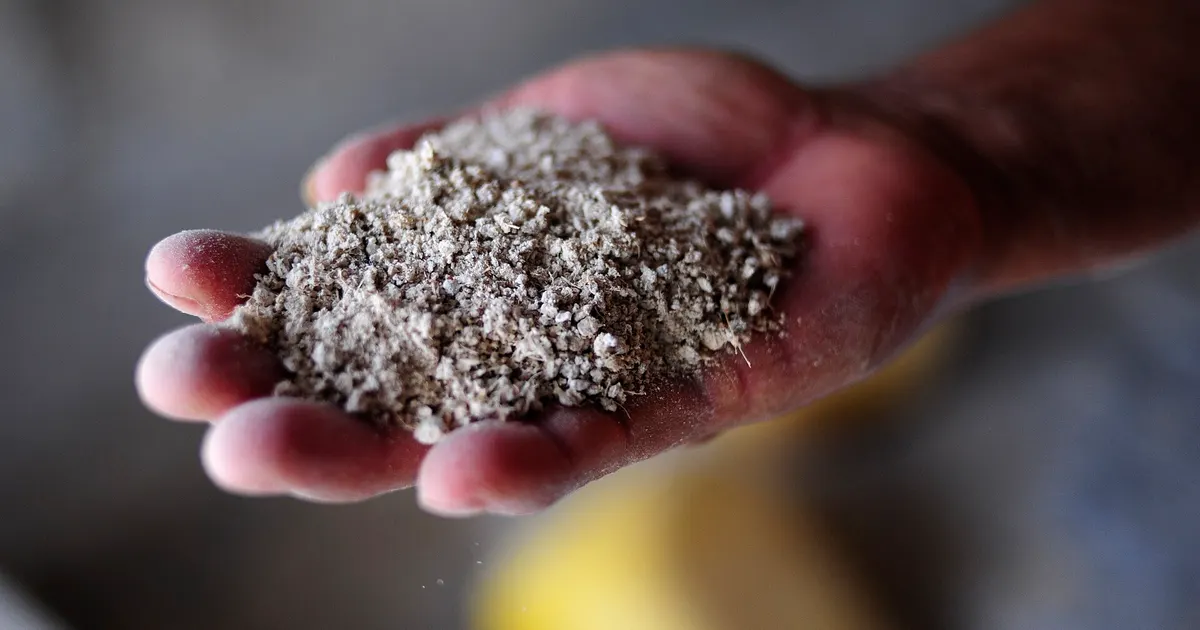
Cassava starch. Cassava is a root crop grown widely in Vietnam, and its starch is processed in volume for food and industrial use. For bags, the starch is converted into thermoplastic starch (TPS) by mixing it with plasticizers such as glycerol under heat and shear, which makes it flow like a plastic.
PBAT. Polybutylene adipate terephthalate is a flexible polyester. It is made from fossil feedstock today, but it is designed to biodegrade under composting conditions. It gives film its toughness and stretch.
Other ingredients. Many compostable bag compounds also contain PLA (to add stiffness), mineral filler such as calcium carbonate (to cut cost) and small amounts of additives for processing.
Blends are compounded into pellets and blown into film. The share of starch in the blend varies widely between makers. A bag sold as a “cassava starch bag” might carry a modest share of starch with PBAT as the main polymer. A bag with a very high starch share is possible but is more sensitive to moisture.
How the ratio changes performance
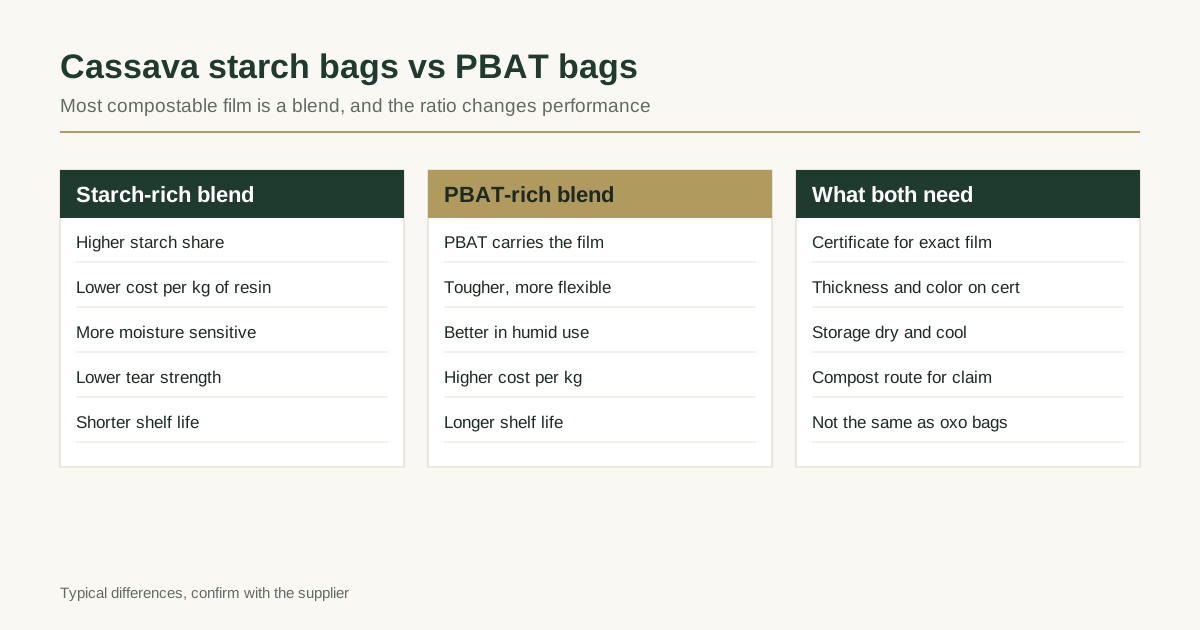
| Property | Starch-rich blend | PBAT-rich blend |
|---|---|---|
| Feel | Often stiffer, sometimes papery | Soft, flexible, plastic-like |
| Tear and puncture strength | Lower | Higher |
| Moisture sensitivity | Higher, can soften in damp use | Lower |
| Resin cost | Lower | Higher |
| Shelf life | Shorter | Longer |
| Clarity | Usually cloudy | Cloudy to semi-clear |
| Common use | Light produce bags, low-load bags | Carrier bags, bin liners, shipping mailers |
A buyer looking at price alone will pick the starch-rich bag every time. The question is whether it will survive its use: wet vegetables, the weight of a carton or a month on a shelf in a humid warehouse.
Thickness and strength
Thickness is the second specification. Film thickness is stated in microns (thousandths of a millimeter). Lightweight produce bags are thin, shopping bags are thicker and bin liners and mailers are thicker again. A thicker film is stronger but uses more resin, so it costs more and may fall outside a certificate’s thickness range.
Ask for these figures with your sample:
- Thickness in microns, with tolerance
- Tensile strength and elongation
- Tear and dart impact strength, if available
- Seal strength for heat-sealed seams
- Weight per bag
Then test with your actual load. Fill a bag with the heaviest realistic contents, carry it, and leave it for a few days at the humidity of your use.
Shelf life and storage
Compostable films are designed to break down eventually, and that process can start slowly in storage, particularly in heat and humidity. Suppliers often state a shelf life of months, not years. Ask for the stated shelf life, the storage conditions (temperature and humidity) and date coding on cartons.
Stock should be kept cool and dry, away from direct sun. If a bag becomes brittle, discolored or sticky, it may be ageing. Plan purchases so that you use stock within the stated window, and avoid over-ordering for a slow program. See our guide to MOQ and lead time for how ordering and timing fit together.
Certificates: what they cover and what they do not
Compostability certification for film is item specific. A certificate typically covers a film formulation at a stated thickness, with defined colorants and inks. Changing the thickness, the color or the ink can take a bag outside the certified item.
Certification routes include BPI for the US (ASTM D6400) and TUV Austria OK compost INDUSTRIAL and similar schemes based on EN 13432. Some schemes also offer a home compostable mark under separate conditions.
We do not verify or confirm any manufacturer’s compostability certificate. Request the original and check it in the issuer’s public database. Our guide to compostability certificates and food contact tests lists what to ask for. If the bag will touch food, also ask for food-contact documents suited to your market.
Claims: wording that holds up
- Compostable. Use only with a certificate for the exact bag and a route where it will be composted. Some regions restrict the word without certification or limit the claim to places with composting infrastructure.
- Biodegradable. Rules vary and unqualified claims are restricted in several regions.
- Plant-based or contains starch. Accurate only if described honestly. A bag with a starch share still contains a fossil-based polymer such as PBAT, so a “plastic-free” claim is not correct.
- Oxo-degradable. This is a different technology, in which additives fragment ordinary plastic. It is not the same as compostable film, and it is restricted in the EU. Do not accept it as a substitute.
Check the rules of your destination with a compliance advisor before printing a claim.
Tests worth running
| Test | Purpose |
|---|---|
| Load and carry | Confirm strength under realistic weight |
| Wet use | Confirm film behavior in damp conditions |
| Seal and seam check | Confirm that handles and seams do not split |
| Storage soak | Hold bags at warm, humid conditions for several days, then retest strength |
| Print check | Confirm ink adhesion and that inks match the certificate |
| Document check | Confirm formulation, thickness and color on the certificate |
Common mistakes when buying compostable bags
- Buying on price per kilogram of film. A thinner, starch-rich film may be cheaper per bag and fail in use. Compare cost per bag that passes your load test.
- Skipping the storage question. Ordering a year of stock for a slow program can leave you with aged film.
- Changing thickness or color late. Either can take the bag outside the certified item.
- Accepting a claim without a route. If nobody composts the bag where it is used, the claim may mislead customers.
- Treating oxo-degradable bags as equivalent. They are a different technology and are restricted in some markets.
How biopackvn.com fits in
We are a matching service, not a factory and not an agent that manages orders. You send an RFQ, we reply within 24 business hours and we introduce up to 3 Vietnamese manufacturers that suit your item and volume. You then deal with them directly on samples, testing and price. It is free for buyers, we take no commission and we sign an NDA on request.
Next step
A useful RFQ for compostable bags includes:
- Type: carrier bag, produce bag, bin liner or mailer, with dimensions
- Film: thickness in microns, color and print requirements
- Blend: the share of starch and PBAT you want or open to advice
- Use and load: weight, wet use, storage time
- Market and claims: destination country and the claim you plan to print
- Documents: the certificate for the exact film, thickness and color
See our compostable packaging sourcing page and then send your RFQ.
Frequently asked questions
Are cassava starch bags made only from cassava?
Usually not. Bags sold as cassava starch bags are most often blends in which thermoplastic starch is mixed with PBAT, a biodegradable polyester made from fossil feedstock, and sometimes PLA or mineral filler. Ask for the blend by weight and the resin supplier's data. Starch-only films exist but are more sensitive to water.
Are PBAT bags compostable?
PBAT films can be certified for industrial composting under standards such as EN 13432 and ASTM D6400, but the certificate covers a specific film as tested. Check the original certificate for your exact bag, thickness and color, and confirm that a composting route exists where the bag will be used.
How long do compostable bags last in storage?
Compostable films can degrade slowly in storage, especially in heat and humidity, so suppliers commonly state a shelf life of months rather than years. Ask for a stated shelf life, the storage conditions and the date coding on cartons, and keep stock cool and dry.
BioPack VN is a matching service, not a manufacturer. Figures above are typical market ranges for planning, not quotes, and we do not confirm any manufacturer's certificates. Send an RFQ to be introduced to up to 3 Vietnamese manufacturers within 24 business hours.