Sugarcane Bagasse Pulp vs Bamboo Pulp for Molded Fiber: Strength, Finish and Supply
Key points
- Bagasse is a sugar mill by-product with shorter fiber and pith, and bamboo pulp is made on purpose from bamboo with longer, stronger fiber at a usually higher price.
- Many factories blend the two, so ask for the blend percentage in writing and for a fiber analysis if the claim appears on your pack.
- Bamboo fiber tableware made with melamine resin is a different product from molded bamboo pulp and is not compostable, so check what the item is made of.
When a buyer asks for bamboo molded fiber, the supplier often hears one of three things: a pure bamboo pulp piece, a blend of bamboo and bagasse, or a bamboo-look product that is something else entirely. Prices differ, claims differ and so do risks. Knowing how the two fibers compare lets you ask a sharper question.
This guide compares sugarcane bagasse pulp and bamboo pulp for molded fiber tableware and packaging: fiber, strength, finish, cost, supply and the claims that go with each. All numbers are typical ranges to confirm with the manufacturer. For the broader material map, see our overview of what Vietnamese eco packaging factories make.
Where each fiber comes from
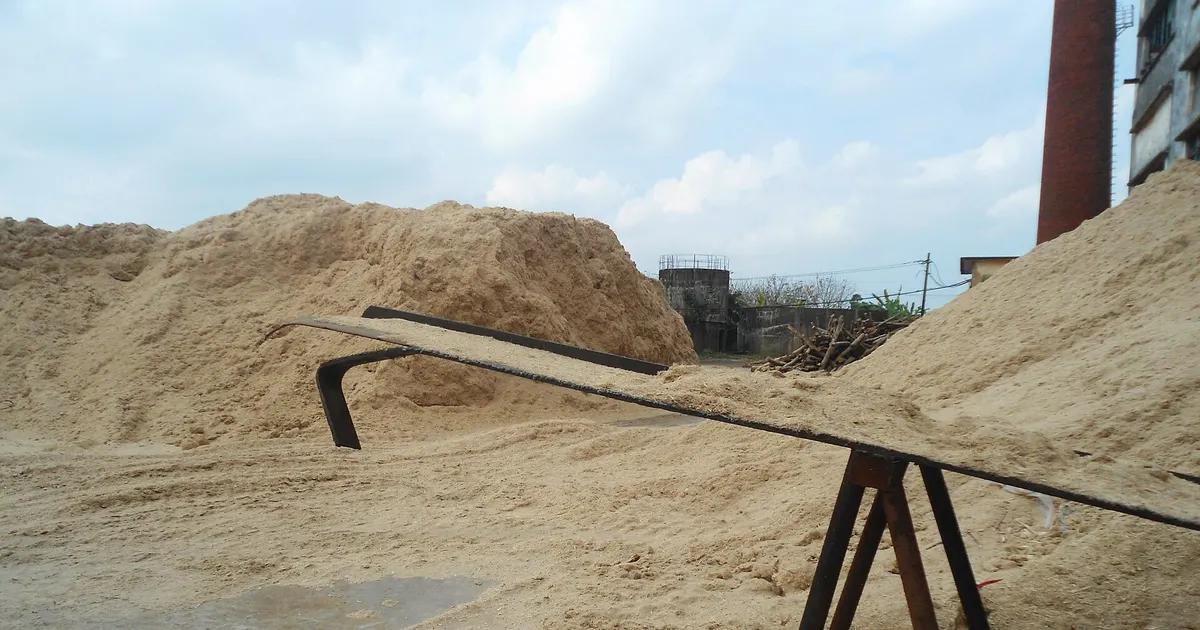
Bagasse is the fibrous residue left after sugarcane is crushed for juice. Sugar mills produce it as a by-product, and mills burn much of it as boiler fuel. Tableware factories buy what is left, so supply follows the crushing season, which in Vietnam typically runs from late in the year into spring. Plants that depend on bagasse need to stock enough fiber to cover the rest of the year, which makes storage conditions a quality question. In our guide to how bagasse tableware is made the fiber intake step covers what to ask.
Bamboo pulp is made on purpose. Bamboo culms are chipped and cooked, usually by chemical pulping, then washed and often bleached. Bamboo grows quickly and the pulp can be produced year-round if the pulp mill has bamboo supply. A molded fiber factory may buy bamboo pulp as sheets or bales and re-pulp it, or buy ready-made blended pulp.
Fiber and performance
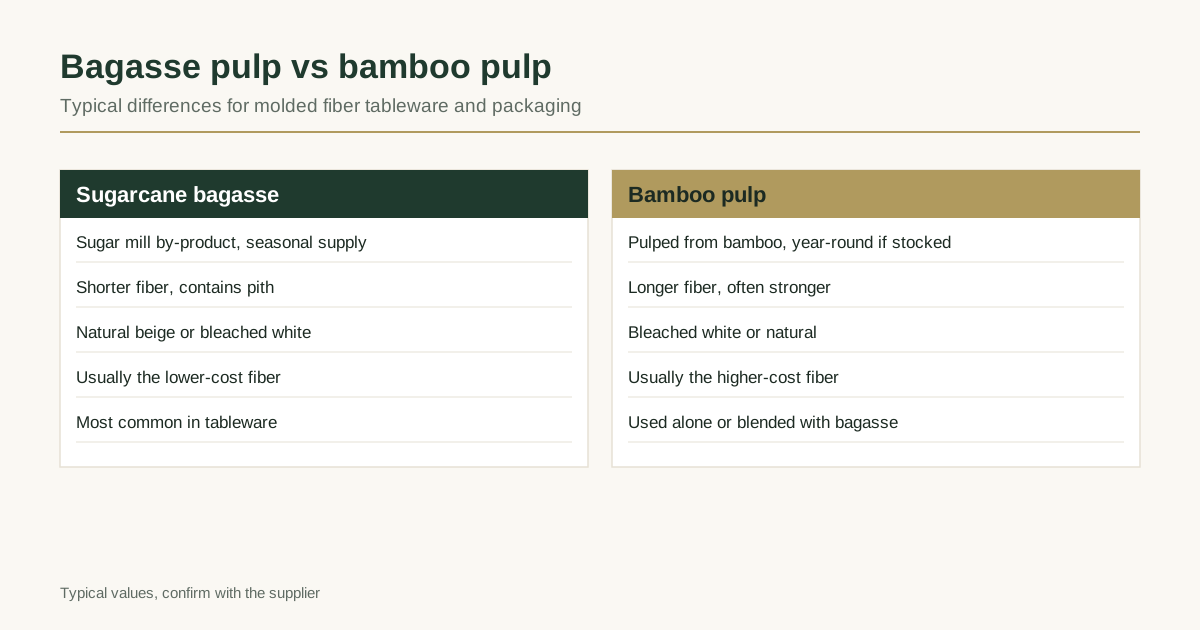
Fiber length is the technical difference that matters most. Bamboo fibers are generally longer than bagasse fibers, and longer fibers form a stronger network when they bond. Bagasse also contains pith, soft non-fibrous tissue that weakens the sheet if it is not removed.
| Factor | Bagasse pulp | Bamboo pulp |
|---|---|---|
| Source | Sugar mill by-product | Dedicated bamboo pulping |
| Fiber length | Shorter | Generally longer |
| Pith and specks | Present unless depithed | Largely absent after pulping |
| Strength at the same weight | Good | Often higher |
| Surface finish | Smooth when well pressed | Often smoother and denser |
| Whiteness | Natural beige or bleached white | Natural or bleached white |
| Typical price | Usually lower | Usually higher |
| Supply pattern | Seasonal, needs stocking | More even if the pulp mill has bamboo |
| Common uses | Plates, bowls, clamshells, cups | Premium tableware, thin items, blends |
Strength differences show up as a thinner or lighter piece at the same stiffness, not as a different pass or fail result in a simple water test. A bamboo-rich piece can often be lighter at similar stiffness, which offsets part of the price gap. Compare quotes at the same weight and wall thickness, and check the piece on a scale.
Blends: the common middle path
Many factories run blends of bagasse and bamboo pulp. The blend can raise strength and whiteness over pure bagasse while holding cost below pure bamboo. Blend percentages vary widely and are often not stated unless you ask.
Questions to ask:
- What is the blend by weight, for this specific item?
- Does it change by season or by fiber availability?
- Is there a fiber analysis from a laboratory? Fiber furnish analysis for paper and pulp products is covered by ISO 9184.
- Can you hold the blend constant for the whole order?
If you plan to print “bamboo” on the pack, check what claim the blend supports. A product that is mostly bagasse with a small share of bamboo does not justify a headline bamboo claim in every market, and rules on environmental and material claims vary. Ask your compliance advisor.
The melamine-bamboo trap
Some products sold as “bamboo fiber tableware” are not molded pulp at all. They are made from ground bamboo powder mixed with melamine-formaldehyde resin and pressed into shape. They look like durable plastic plates and are marketed as plant-based, but the resin binder is a plastic. They are not compostable, and in some markets regulators have raised concerns about migration from such products when they contact hot or acidic food.
If your plan is a compostable or fiber-based product, require the manufacturer to state the full material composition, including any resin or binder. A real molded pulp item has no resin binder and is made from wet-formed fiber, as described in our guide to wet press vs dry press molded fiber.
Cost and supply
In most quotes, bamboo-rich pieces cost more per piece than pure bagasse, because bamboo pulp costs more per tonne than raw bagasse fiber. A blend sits in between. The price gap narrows if the bamboo piece is lighter and widens if the factory buys pulp from distant suppliers.
Supply matters more than the sticker price on long programs. Bagasse supply follows the sugar season, so a factory with weak stocking might switch fiber blends mid-year. If your specification needs a constant blend, put it in the contract. Our guide on bagasse packaging cost from Vietnam explains how piece weight and fiber price combine in a quote.
Which fiber fits which use
| Use | Often a good fit | Reason |
|---|---|---|
| Standard plates, bowls and clamshells at volume | Bagasse | Proven, economical |
| Premium white tableware with a fine finish | Bamboo or blend | Smoother surface, higher strength |
| Thin-wall items where weight matters | Blend or bamboo | Strength allows lower weight |
| Very low-cost foodservice items | Bagasse | Lowest fiber cost |
| Items with a bamboo story on the pack | Verified bamboo pulp content | Claim must match the composition |
Certificates and testing
Compostability and food contact certificates are item specific, so a blend change can move the product outside the certified item. Ask the supplier which fiber blend the certificate covers, and ask for the original document. We do not verify or confirm any manufacturer’s compostability certificate (BPI, TUV Austria OK compost, ASTM D6400 or EN 13432). Check each one with the issuer. For what to request, see our guide to compostability certificates and food contact tests.
For chain-of-custody or sustainable sourcing claims on bamboo, ask what scheme applies and request the supporting certificate for the pulp supplier, and verify it with the scheme.
How biopackvn.com fits in
We are a matching service, not a factory and not an agent that manages orders. You send an RFQ, we reply within 24 business hours and we introduce up to 3 Vietnamese manufacturers that suit your fiber, item and volume. You then work with them directly. It is free for buyers, we take no commission and we sign an NDA on request.
Next step
A useful RFQ for fiber choice includes:
- Fiber: bagasse, bamboo, a blend with a target percentage, or open to advice
- Item and size: dimensions, target weight and wall thickness
- Finish: natural beige or bleached white, smooth surface requirements
- Claims: any bamboo or plant-based claim you plan to print
- Documents: composition statement, fiber analysis and certificates for the exact item
See our bagasse tableware sourcing page for standard items, then send your RFQ.
Frequently asked questions
Is bamboo pulp better than bagasse for molded fiber?
It depends on the item. Bamboo pulp has longer fibers, which tends to give higher strength and a smoother, whiter surface, and it usually costs more. Bagasse is cheaper and well proven for plates, bowls and clamshells. Compare samples at the same weight and thickness before deciding.
What is a bagasse and bamboo blend?
A blend mixes bagasse pulp and bamboo pulp, often to improve strength or whiteness while keeping cost under control. The percentage varies by factory. Ask for the blend in writing, and for a fiber analysis report if you plan to make a bamboo claim on your pack.
Is bamboo fiber tableware compostable?
Molded bamboo pulp can be, but some products sold as bamboo fiber tableware are made from bamboo powder bound with melamine resin, which is not compostable. Ask for the full material composition and for the compostability certificate for the exact item, and check it with the issuer.
BioPack VN is a matching service, not a manufacturer. Figures above are typical market ranges for planning, not quotes, and we do not confirm any manufacturer's certificates. Send an RFQ to be introduced to up to 3 Vietnamese manufacturers within 24 business hours.